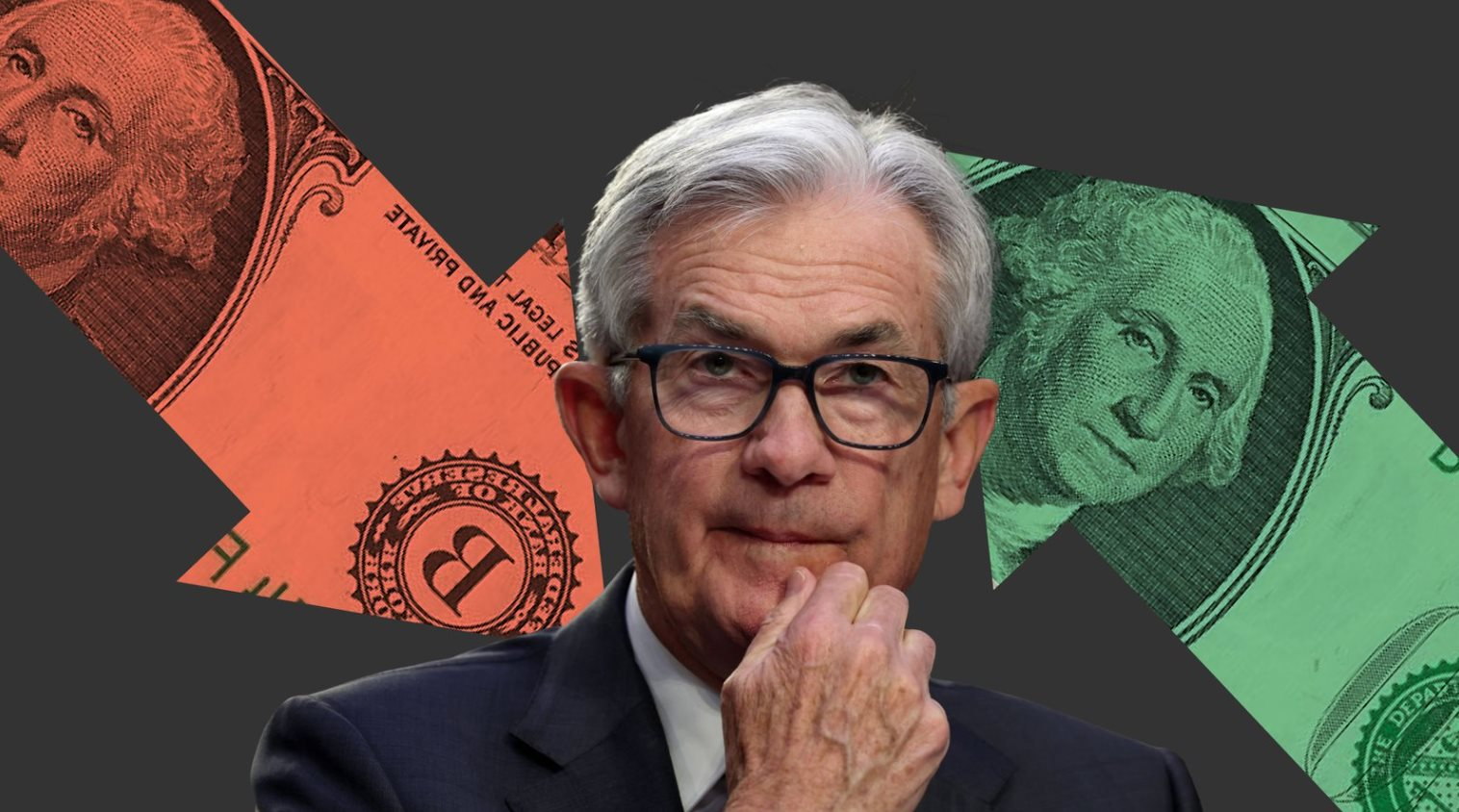
Why does the “interest rate policy” seems to determine the value of currencies in Forex trading? Even a mere 0.25% change can have a profound impact on market trends.
“rate hikes,” “rate cuts,” “rate unchanged”… what exactly are they?
The term of “interest rate” might sound complicated. However, if we examine it from the view of “savings” and “loans,” the relationship between “policy rates” and “Currencies” becomes easy to understand.
This article explains the connection between “Currencies” and “interest rates” in the simpliest way. Please feel free to read through to the end.
What You’ll Learn in This Article
- The basic mechanism of interest rates.
- The 4 major central banks to watch.
- Why Forex is affected by interest rates.
- The impact of rate cuts/hikes on Forex.
- FX trading key strategies on policy rates.
Contents
The Easiest Guide of Interest Rate Policy
| Interest rate policy is a core tool of monetary policy used by a country’s central bank (like the U.S. Federal Reserve, the European Central Bank, or the Bank of Japan) |
In Financial Market, it’s often said that “interest rate policy is crucial.”
But somebody might think, how exactly does a policy rate work? why is it so important? Actually, one might even have a question, generally what is interest rate?
Don’t worry! Let’s start from the very begining, its basic, step by step.
First, let’s set the Forex Market aside and clearly understand “what is interest rate.” Then, think about interest rate policy on Forex.
What is an interest rate?
| An interest rate is the percentage ratio of interest, which charged when depositing or borrowing money. |
Various financial products have interest rates. Usually, those come with yearly iterest rate, for instance 0.50%, 2.00%, 3.00% so on.
Interest Rate of Financial Products
- Checking account with interest rates
- Saving account with interest rates
- Credit card payment with interest rates
- Card loan with interest rates
- Mortgage with interest rates
If a savings account claim a monthly interest rate of 1.0% (as calculated by yearly interest rates), a deposit of 1,000 dollar would earn 10 dollar in interest per month.
Conversely, when borrowing money (e.g., via a card loan), interest is added to the payment amount. For a 1 million yen loan with a monthly interest rate of 1.0% (yearly base), you would need to repay an extra 10 dollar in interest.
What is Interest Rate Policy?
The interest rate policy is the standard benchmark rate that serves as the basis for all the various interest rates mentioned above.
Except for extremely predatory lenders, financial institutions follow the benchmark.
The policy rates are fluctuated as according to economic conditions. Adjusting rates up or down is so called as “rate hike,” “rate cut,” or “hold.”
- Raising interest rates → “Rate Hike”
- Lowering interest rates → “Rate Cut”
- Keeping rates unchanged → “Hold”
(Note: In Forex, “interest rate” usually refers to the “policy rate.”)
Who determins Interest Rate Policy?
| The interest rate policy is determined by the central bank of each country. |
The central bank manages reserves and circulation of currency, national asset (cash balance, taxes, budgets, etc.) Its role is different from that of private banks like MUFG Bank or Rakuten Bank. However private banks use an account of the central bank for the interbank transactions.
Commanly Individulas and other companies do not use the central bank. Government agencies, local governments, and financial institutions utilize them.

Central banks have three main functions:
- Accepting deposits from and lending to financial institutions.
- Managing national funds and stabilizing the economy and currency rate
- Issuing new currency to replace old currency
Among these functions, the one most closely related to Forex is “Stabilizing the economy and currency rate = Interest Rate Policy.”
Central banks constantly engage in “rate hikes” or “rate cuts” to achieve “economic stability,” and these interest rates consequently affect currency values.
Before understanding the Forex-interest rate relationship, let’s see why “rate hikes” and “rate cuts” are related to the rate of currency and the economy.
What is relationship of Interest Rate and Forex Market
| Most easily understand the relationship between the interest rate and the economy is, the effect of interest rate toward Inflation. |
A growing economy naturally leads to higher prices, a phenomenon known as healthy inflation. In G7 nations, this is ideally maintained at around 2.0%, though other countries set its own specific target to stabilize its unique economy.
- Inflation: Price increases abruptly exceeding average or target rate.
- Deflation: Price falls abruptly, also causing unstability of the economy.
Therefore, central banks would adjust interest rates to correct excessive inflation or deflation.
- When inflation go higher: “Rate hikes” are implemented to curb consumption. Higher Interest rate of credit card loan or the bank loan, help to reduce spending. Less spending causes the higher price to cool down.
- When deflation go lower: Conversely, “rate cuts” are carried out to stimulate consumption. Lower interest rates make borrowing and spending easier, boosting consumption and raising prices.
How does it work? -rate hike and rate cut
“Rate hike” and “rate cut” are closely tied to economic activity.

- “Rate Hike”: Means raising rates to lower prices, which conduct higher borrowing cost for companies and individuals. So that calms the economy activity and slower inflation. Sometimes, there is a risk of economic slowdown.
- “Rate Cut”: Means lowering rates to raise prices, which conduct lower borrowing cost for companies and individuals. So that encourage the economy activity and quick inflation. Sometimes, there is a risk of too higher inflation.
| Interest rates policy is constantly discussed and adjusted by the central bank comittee. Policy always change up or down, often hold, to stabilize the healthy economic. |
The four major central banks in the world
Here, let’s take a look at the four major central banks in the world. (US, EU, UK, Japan).
1. The Fed (USA: Federal Reserve)
The most important central bank in the world is that of the United States. The US does not have a central bank. Instead, an institution called the Federal Reserve fulfills this role. The term‘Federal Reserve’refers to the nation’s central banking system. It is also known as the Fed or the FRB.
The policy interest rate announced by Federal Reserve has the greatest influence on the global economy. The committee that determines the US policy rate is called the FOMC, and its announcements are closely watched all over the world.

- The current Fed Chair is Jerome Powell. Announcing US interest rates carries immense pressure, as even a 0.25% change can significantly affect the US economy and the US dollar.
- The US policy rate (as of April 2024) is 5.50%, remaining on hold after 11 consecutive rate hikes.
2. ECB (EU: European Central Bank)
The next most closely watched policy rate is that of the European Union. The EU is a union of 27 European countries, and the European Central Bank (ECB) serves as its central bank. Like the US, the ECB’s policy rate has a significant impact on both the economy and the currency.

- The current ECB President is Christine Lagarde, who faces the challenge of balancing inflation control across economically diverse member states.
- The EU policy rate (as of April 2024) is 4.50%, remaining on hold after 10 consecutive rate hikes.
3. BOE (UK: Bank of England)
Another one that cannot be overlooked is the central bank of the United Kingdom, the historically significant Bank of England, also known as the BOE. Established in 1694, it is over 320 years old and played a key role in shaping modern central banking systems.

- The current Governor of the Bank of England is Andrew Bailey. In November 2021, he surprised the markets with a sudden 0.50% rate hike, which marked the beginning of the global tightening cycle. The UK subsequently implemented 14 consecutive rate hikes to combat inflation.
- The UK policy rate (as of April 2024, ) stands at 5.25%, remaining on hold after these 14 consecutive hikes.
4. BOJ (Japan: Bank of Japan)
And here is one more bank, Japan’s central bank (BOJ), is an extreme outlier—almost one of the ‘seven wonders’ of the financial world. In Japan, it is affectionately known as ‘Nichigin.’
The BOJ is exceptional because Japan’s policy rate fell to near 0% around 1999 and has changed very little since. Despite the pandemic and rising prices, the BOJ kept its policy rate unchanged for years. While central banks around the world raced to raise rates, the BOJ persistently maintained ultra-low—even negative—rates.

- The current Governor of the Bank of Japan is Kazuo Ueda, who succeeded former Governor Kuroda and his‘unprecedented easing’policies. Governor Ueda has finally moved away from negative rates but remains extremely cautious in his approach.
- Japan’s policy rate stands at 0.10% (as of April 2024 ), making it the only G7 country to maintain such low rates.
As we’ve seen briefly, each central bank’s policy rate has its own drama, which can be quite interesting to follow.
The mechanism between Forex and Interest rate
Now, let’s get to the main point, why do currency values move when interest rates rise or fall? The following diagrams and charts clarify the mechanism between Forex and interest rates.
Impact of Rate Hikes on Forex
| A key point in the Forex–interest rate relationship is that capital tends to flow toward higher interest rates. |
Why? It’s the same mechanism as choosing a saving account.
People prefer to choose the saving plan with the higher interest rate. Similarly, comparing “US dollars with a 5.0% rate” and “Japanese yen with a 0.1% rate,” capital will naturally flows into the higher-yielding US dollar.

Therefore, a “rate hike” often becomes a catalyst for currency appreciation.
Example – Price Action by Rate Hikes
BOE Rate Hike (March 2023)
The BOE implemented a 0.25% hike to 4.25%. This was its 11th consecutive hike. GBP/JPY surged from 158.00 to a high of 174.20—a 1,600 pip rise over two months.
GBPJPY 15minutes Chart
ECB Rate Hike (September 2022)
The ECB hiked by 0.75%. EUR/JPY rose about 1,200 pips over two months, a pace unimaginable during the long zero-rate period.
EURJPY 15minutes Chart
Impact of Rate Cuts on Forex
| Unlike “rate hikes” can be a buy signal, “rate cuts” can be a sell signal. In some cases, rate cuts make investor sentiment worsen, accelerate selling. |

Typically, rate hikes are introduced to cool an overheated, inflationary economy. A rate cut represents the opposite scenario—it signals economic weakness, falling prices, or expectations of further decline. This perception can trigger speculative selling driven by underlying market anxiety.
Example – Price Action by Rate Cuts
US Emergency Rate Cut (March 2020)
The Fed announced an emergency cut amid COVID-19 fears. USD/JPY plunged from 107.90 to 100.90 in three days—a 700 pip tumble.
USDJPY 15 minutes Chart
However, shortly afterward, the FOMC announced a massive emergency support program, and the dollar began to rise.
Swiss National Bank (SNB) Surprise Cut (March 2024)
The SNB announced an unexpected cut after inflation cooled. The Swiss franc (CHF) fell against most currencies, even against the low-yielding yen. CHF/JPY fell about 400 pips in a week.
CHFJPY 15 minutes Chart
Impact of Interest Rate Differentials
| The wider the interest rate differential, the more easily capital flows from the low-yielding currency to the high-yielding one. |
However, currencies from unstable or less-developed economies tend to carry higher risk, which restricts capital inflows despite their higher rates.

As the chart illustrates, Japan is the only major economy whose policy rate has remained virtually unchanged. When other countries raise their rates, capital flows out of the Japanese yen with relative ease.
Currencies moving from low to higher rates—such as the USD, EUR, and GBP—draw more investor attention than currencies that are already high-yielding. The larger the differential becomes, the more attractive the high-yielding currency grows.
Since 2022, with global rate hikes occurring almost in unison except in Japan, the yen has steadily weakened against other major currencies.
Example – Price Action by Rate Differenses
Widening Japan-UK Rate Differential (2024)
In December 2023, expectations of rate cuts by the BOE and rate hikes by the BOJ pushed GBP/JPY lower.
GBPJPY 1day Chart

However, as a result of that the BOJ remained reluctant to take decisive action, once again reignited yen selling, driving GBP toward the 200 level.
Widening Japan-US Rate Differential (2024)
Also Japan’s policy rate gap with the United States widened significantly, triggering continued yen selling against the dollar.
USDJPY 15m Chart

USD/JPY finally broke into the 158 range, a 34-year low for the yen. As long as the interest rate differential doesn’t narrow, stemming yen weakness seems difficult.
As seen so far, interest rates can be one of the most critical factor in Forex.
The impact of policy rates on FX is immense. It’s no exaggeration to say that interest rates are everything for currency value. Checking policy rates is essential for FX trading.
Forex Trading with Interest Rate

| On the Forex Market, it is strongly recommended trading with close attention to policy rate. |
This sector, lets see how to trade Forex with the impact of interest rate.
Key Points for Trading Forex with Policy Rates
Key point 1. To Know the Policy Rate Announcement Schedule: For major central banks (Fed, ECB, BOE, BOJ). Check your FX broker’s economic calendar.
Key point 2. Research Market Expectations/Consensus: This is crucial to understand how professionals and other traders foresee upcoming decisions. That provides strategic material.
Key point 3. Trade Based on Scenarios: After gathering information, prepare for at least 2-3 scenarios.
Scenario Examples
If the BOJ raises rates as expected, the yen may strengthen.
However, if US economic data remains strong, the likelihood of a Fed cut decreases, which could support the dollar.
If both the probability of a Fed cut and a BOJ hike rise, the dollar could fall sharply.”
Key point 4. Simulate entry/exit plans (market/limit orders, take-profit, stop-loss). In real time, many traders are likely to feel pressured and panic after a rate decision is announced. Therefore, it’s better to practice executing your orders in advance so you’re prepared when the moment comes.
Check Daily Fluctuating Interest Rates
Even after policy announcements, still actual interest rates fluctuate daily. The 10-year government bond yield serves as a daily benchmark, it often correlates with currency price movements.
USDJPY, US10yr 4H Chart

Relationship between 10-year yielsd and currency rate:
- Rising 10-year bond yield → Currency tends to appreciate
- Falling yield → Currency tends to depreciate.
Monitoring 10-year bond yield charts (e.g., on TradingView) will provide trade hints.
Assets That Move Opposite to Interest Rates
Unlike 10 year treasuary yields, stocks, gold, and cryptocurrencies often move inversely to interest rates.
USDJPY, US10yr, Gold, BTC 4H Chart

- When Rates Rise:
- Stocks: Tend to fall as high rates can slow corporate activity.
- Gold: Tends to fall as yield-bearing currencies become more attractive.
- Crypto: Often sold as risk appetite wanes and currency yields rise.
- When Rates Fall:
- Stocks: Tend to rise with improved corporate activity prospects.
- Gold: Tends to be bought as currency appeal diminishes or during uncertainty.
- Crypto: Often bought as funds seek alternatives to low-yield currencies.
Occationaly these assets could be one of the strongest clues, to analyze forex market along interest rate.
Tips and Precautions Forex Trading with Policy Rates

Lastly, here, outlined the essential tips and cautions for success in policy-rate-based trading.
Gather Information in Fragments:
Don’t try to understand everything at once. Start by picking up understandable parts of economic articles. Understanding will grow over time.
Markets Often Move on Expectations:
“Buy the rumor, sell the news.” Prices may rise on hike expectations and fall on the actual announcement if it was fully anticipated. Be cautious.
Surprise Announcements Offer Big Moves:
The most critical aspect is “market consensus.”
- Worse than expected: Potential sharp decline.
- As expected: Often leads to short-lived volatility (price may revert).
- Better than expected: Can trigger a sharp rally or surge.
- Act quickly to ride the wave on surprises.
Higher Rates Don’t Guarantee Appreciation:
This is the pitfall. If rate hikes are seen as damaging the economy (e.g., causing a deep recession), the currency may sell off due to economic fears.
(Note: It’s also useful to check key economic indicators alongside policy rates.)
Summary
In Forex Trading, analysis is broadly divided into Technical Analysis and Fundamental Analysis. Technicals alone often fail to capture the complex psychology of Forex Market, while fundamentals alone make it hard to pinpoint precise entry/exit points. The reality is that balancing both leads to more successful trades.
Technical traders who previously ignored fundamentals will see dramatic improvement by understanding the relationship between Currency and interest rate. Interest Rate often gives unfamiliar impression to somebody, but once you understand the basic, it is pretty simple.
To understand Interest rate is simply two ways. One is that how much you can get the interests by saving your money at bank account. Another is how much take the costs when you borrow some amount. Then you will know how the price of currency will be affected by higher (lower) interest rate easily.